
The ball boys and girls at Roland-Garros, referred to as “ballos” in the FFT jargon, do not receive any salary. No pay slips, no employment contracts, no compensation in the sense of the Labor Code. The salary of ball boys and girls at Roland-Garros is a question that arises every year in Google searches, and the answer remains the same: these young people do not receive financial compensation.
Legal Qualification of the Volunteer Status of Ball Boys and Girls at Roland-Garros
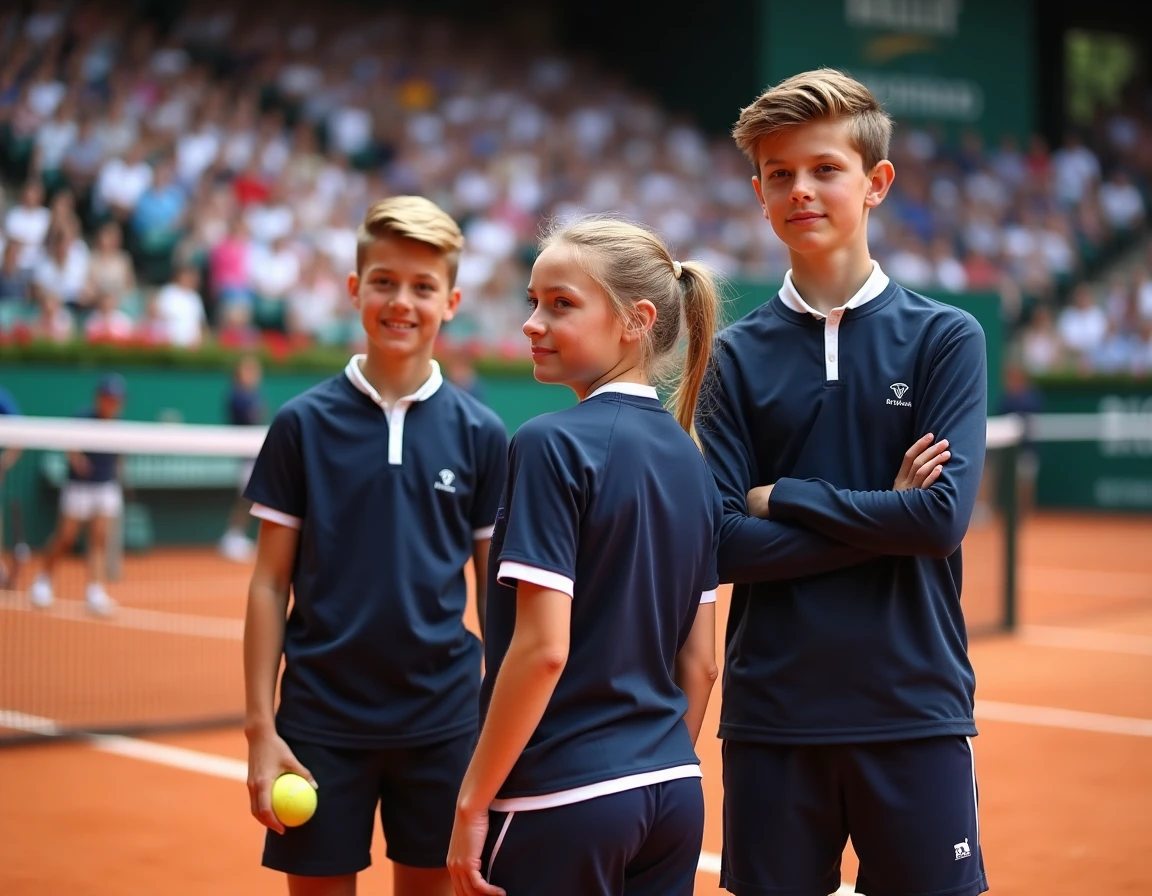
The status of the ballos is based on a gray area of French labor law. The FFT does not consider them as employees but as volunteer participants in an educational and sports program. This qualification allows them to avoid the obligations related to the employment of minors, particularly the prefectural authorization required to employ children in entertainment or advertising.
The problem is structural. The ball boys and girls ensure rotations on the courts throughout the tournament, which lasts about two weeks, with long days, strict discipline, and real physical constraints (heat, postures, repeated sprints). This level of commitment, framed by precise instructions and subject to a hierarchy, presents several characteristics of the subordinate relationship as defined by social jurisprudence.
Two criteria raise particular questions:
- The ball boys and girls perform tasks defined by the organizer, according to an imposed schedule, under the authority of a team leader
- Their presence is mandatory at the set times, and an unjustified absence can lead to exclusion from the program
No disputes have been brought before the labor courts to date, which maintains the status quo. In the absence of judicial requalification, the FFT has no legal obligation to compensate these young people. To better understand the reality of the salary of ball boys and girls at Roland Garros, one must look beyond the pay slip.
In-Kind Benefits and the “We Are Ballos” Program: What the FFT Really Offers
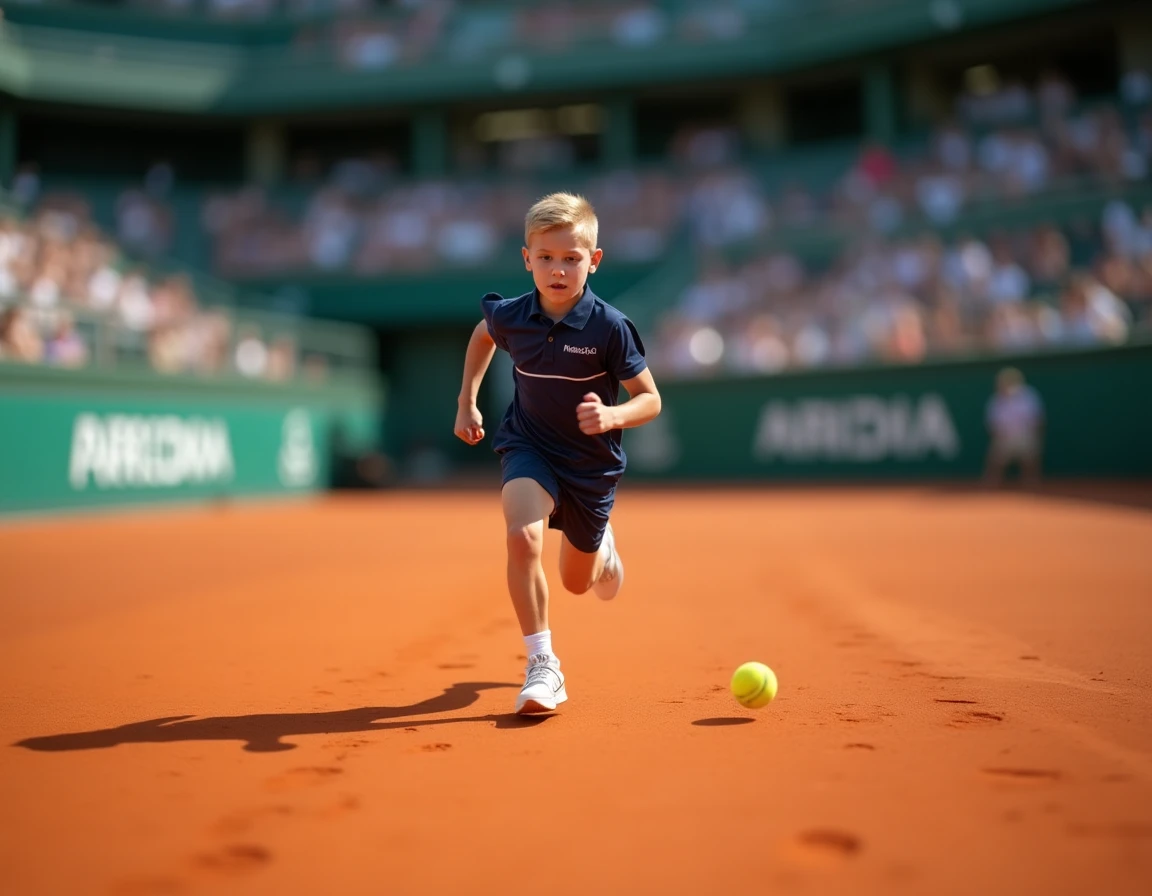
The official communication emphasizes the “experience” dimension rather than “employment”. The “We Are Ballos” program structures the selection and supervision of the ball boys and girls well ahead of the tournament, with regular training sessions at partner clubs.
In return for their commitment, the ballos receive in-kind benefits: complete uniform, meals on site, access to facilities, and sometimes special moments with professional players. A former ball boy from the 2024 edition, interviewed by France TV, described this mission as “one of the most beautiful experiences of his life,” highlighting the proximity to the tournament’s behind-the-scenes and the pride associated with being selected.
The FFT values the prestige of selection as implicit compensation. The application rate far exceeds the number of available spots, reinforcing the argument that young people voluntarily engage and are aware of the situation. The rarity of selection acts as a motivational lever that relieves the organizer of any obligation to pay.
Free Labor and Record Revenue Tournament: The Imbalance in Question
Roland-Garros generates substantial revenue through TV rights, ticket sales, and commercial partnerships. In this context, the volunteer work of several hundred minors poses an image and coherence problem.
Comments on social media (TikTok, Instagram) show a rise in criticism. Viral videos question the “lack of compensation” and contrast the amounts paid to players with the complete absence of financial compensation for the ball boys and girls. This discrepancy fuels a narrative of perceived exploitation, even though the current legal framework allows it.
We observe that the FFT is preparing its defense by emphasizing communication about symbolic benefits. The strategy is clear: the more the “We Are Ballos” program is presented as an exceptional opportunity, the more the salary question becomes secondary in public discourse.
Comparison with Other Grand Slam Tournaments
The French model is not isolated. The four Grand Slam tournaments generally operate on the same principle: ball boys and girls are not employees.
The debate is not unique to Roland-Garros, but the media coverage of the Paris tournament and the French sensitivity to the labor rights of minors concentrate pressure on the FFT.
Towards an Evolution of the Status of Ball Boys and Girls?
No legislative reform is currently in preparation on this specific issue. Labor law for minors in France strictly regulates the employment of children in live entertainment and advertising, but sports events benefit from different treatment as long as the engagement is classified as volunteering.
The pressure will likely come from public opinion rather than from legislators. If a former ball boy or their legal representatives decided to contest the classification of volunteering in court, requalification as an employment contract is not legally excluded. The elements constituting the subordinate relationship (location, hours, directives, sanctions) are documentable.
The current model holds because no one contests it before a judge, and because the prevailing perception remains that of a privilege. As long as applications exceed available spots, the FFT has no economic incentive to modify the system. The day this perception shifts, the question of the salary of ball boys and girls at Roland-Garros will cease to be rhetorical.