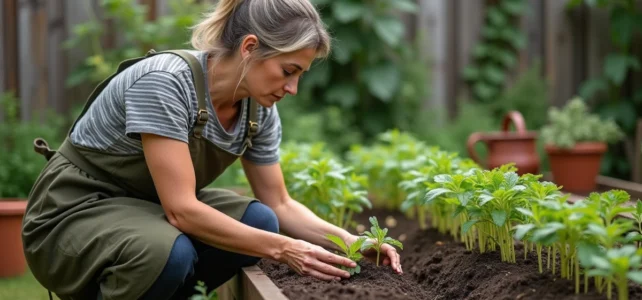
Producing fresh vegetables continuously over twelve months requires thinking differently than with a simple sowing calendar. The year-round vegetable garden relies on a precise sequence of crops, soil management adapted to each season, and physical protections against climatic uncertainties. The use of mulches, companion plants, and plant preparations like nettle manure or horsetail decoction fits into this logic of sustainable production.
Living soil and soil work: what recent trials nuance
The advice to never till your vegetable garden is widely circulated in gardening guides. Trials conducted by regional stations of INRAE and AgroParisTech provide a different perspective. In the context of repeated droughts, strict no-till practices can favor slugs and voles if the plot lacks plant diversity and refuges for beneficial insects.
Read also : Practical tips for visiting a beach in Vannes with your dog
In other words, no-till works provided it is accompanied by other practices. Installing a low hedge along the edge of the vegetable garden, alternating botanical families on each bed, and maintaining permanent ground cover (green manures, organic mulching) reduces surface pest pressure. On clay soils, light superficial work with a broadfork at the end of winter remains relevant for loosening without turning the soil layers.
To deepen these practices and find detailed crop sheets, spotjardin.com offers resources tailored to the different French regions.
Related reading : Tips for Properly Designing Your Garden Pathway
Crop rotation and associations in the vegetable garden: planning over four seasons
Rotation is not just for avoiding diseases. It structures the production calendar for the entire year. The principle: group vegetables by botanical family (solanaceae, cucurbits, legumes, alliums) and assign them a plot that changes each season.
- Legumes (beans, peas, broad beans) fix atmospheric nitrogen in the soil. They ideally precede nutrient-hungry crops like tomatoes or squashes.
- Alliums (garlic, onion, leek) thrive in soils recently enriched with compost and occupy the ground in autumn and winter, periods often left empty.
- Crucifers (cabbages, radishes, turnips) tolerate cold and allow for harvests from November to March if sowing is staggered from the end of summer.
Staggering sowing every three weeks rather than sowing everything at once ensures continuous production. Sowing radishes in March, then in April, then in May, provides three waves of harvest instead of a single peak followed by a gap.
Concrete plant associations
Some associations work based on repeated observations by gardeners: carrots and leeks, for example, protect each other against their respective flies. Basil planted at the foot of tomatoes limits aphids while occupying ground space, which reduces weeding.
On the other hand, field returns diverge on some commonly recommended associations. Garlic at the foot of strawberry plants, for example, does not yield consistent results depending on soil types and regions.
Winter vegetable garden: protections and cold-resistant vegetables
Most French vegetable gardens remain empty from December to February. Yet this is the time when a few well-chosen crops ensure continuity. Lamb’s lettuce, spinach, leeks, and kale withstand moderate frosts without special protection.
For more sensitive vegetables (winter lettuces, broad beans sown in November), a winter cover or a cold frame is sufficient to gain a few degrees. Thick mulching (dead leaves, straw, wood chips) protects the roots and maintains biological activity in the soil even in cold weather.
Planning autumn sowing
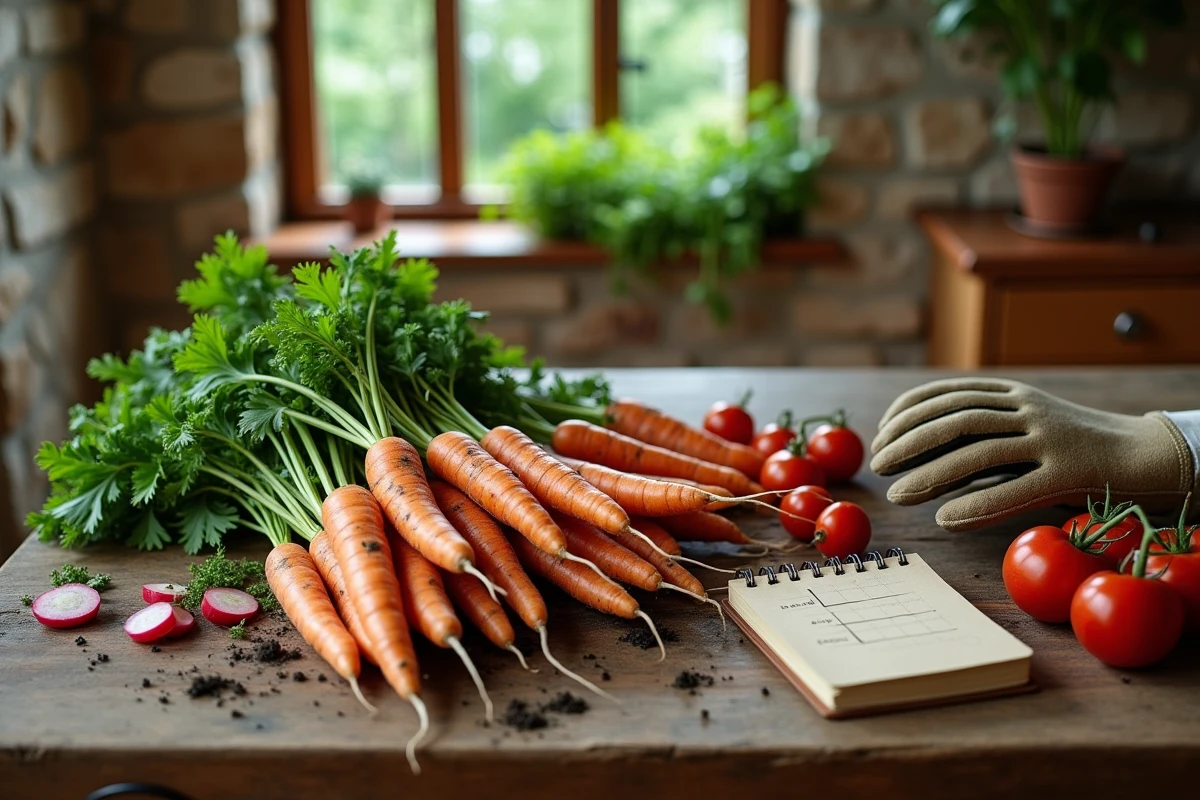
Winter sowing is actually prepared as early as August and September. Sowing green manures (mustard, phacelia) on plots freed up after summer harvests prevents leaving the soil bare. These covers are mowed in the following spring and nourish the soil as they decompose.
Surface compost, spread in a thin layer directly on the beds in autumn, decomposes slowly during winter. In spring, the soil is ready to welcome the first crops without additional input.
Watering and mulching: reducing water consumption in the vegetable garden
With increasingly frequent drought episodes across France, water management has become a central issue. Watering early in the morning or in the evening limits evaporation. A mulch of five to ten centimeters significantly reduces watering needs by maintaining moisture at the root level.
The choice of mulch matters: wheat straw or dried grass clippings are suitable for summer crops, while wood chips (type BRF) are better used on paths or in autumn, as their decomposition mobilizes nitrogen in the soil.
- Installing a rainwater collector covers a significant portion of a small vegetable garden’s needs during the season.
- Drip irrigation, even homemade (buried perforated bottles at the base of plants), targets water where the roots need it.
- Regularly hoeing the surface crust between rows breaks capillary rise and limits evaporation, even without mulching.
A productive vegetable garden over twelve months relies less on isolated tricks than on a coherent system: permanently covered soil, thoughtfully planned rotation throughout the year, staggered sowing, and appropriate winter protections. The available data on no-till practices or plant associations remind us that no technique works as a universal recipe. Observing one’s own land remains the best guide to adjust these practices season after season.