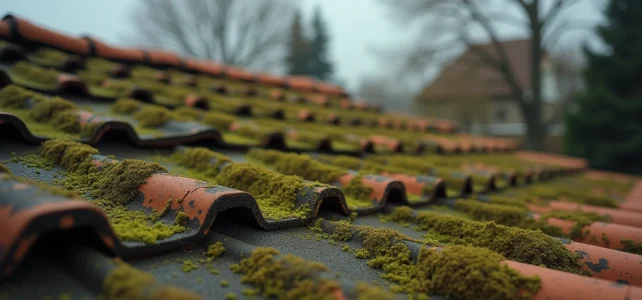
Algae on roofs are not just an aesthetic problem. Their proliferation alters the water behavior of the roofing material, accelerates the porosity of the tiles, and promotes surface capillary retention. Effective treatment requires understanding the biology of the biofilm before choosing an intervention protocol.
Biofilm and microorganisms: what is really happening on your tiles
What we commonly refer to as “algae” on a roof is actually a composite biofilm consisting of algae, cyanobacteria, and fungi. Algae of the genus Gloeocapsa, responsible for the dark streaks on shingles, secrete a pigmented sheath that protects them from UV rays. This mechanism allows them to colonize sun-exposed surfaces, unlike moss, which prefers shade.
See also : Choose the Ideal Shade to Enhance Your Glass Roof
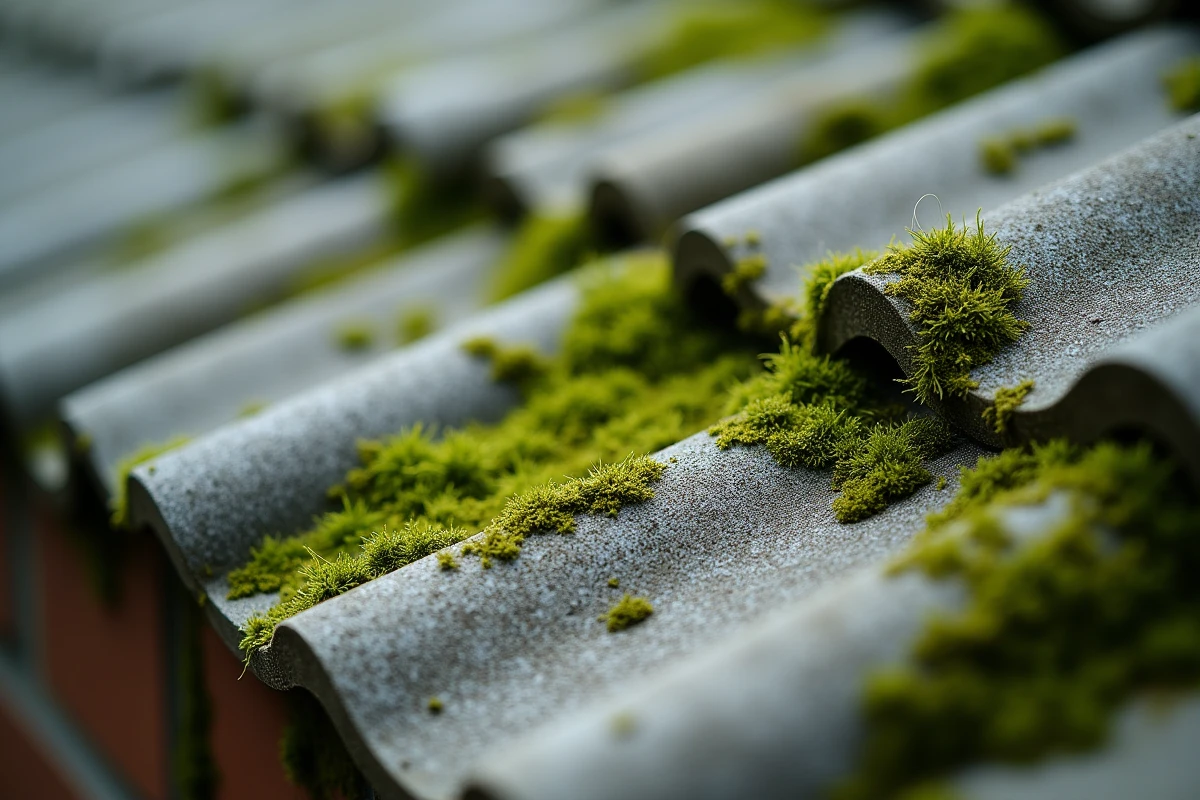
The distinction between algae and lichens determines the choice of treatment. A lichen (a symbiosis of algae and fungus) penetrates the material through rhizines, whereas an algae remains on the surface. Applying a conventional anti-moss treatment on a lichen that has been established for several years will not be sufficient: targeted mechanical action is needed first to break the anchorage before any spraying.
We observe that the confusion between these organisms often leads to inappropriate treatments, with recurrences as soon as the next wet season. Understanding the presence of algae on the roof with Bricotage allows for an accurate diagnosis before intervening.
You may also like : How to effectively recognize and block unwanted calls from the number 0162
Algicide formulations and Biocidal Regulation: what changes for roof treatment
European regulations on biocides are tightening. Several quaternary ammonium compounds, widely used in consumer anti-moss products, are undergoing re-evaluations under Regulation (EU) No. 528/2012. ECHA reports a trend towards restricting the use of these biocides for facades and roofs to limit the contamination of runoff water.
This regulatory pressure is pushing manufacturers to develop so-called “low-runoff” formulations with lower ecotoxicity. For both professionals and individuals, this means that the products available in 2025 are no longer the same as those from three years ago.
Criteria for selecting an algicide product for roofs
- Check that the active substance is on the list of approved substances under the BPR (Biocidal Regulation). A product without a market authorization number is potentially non-compliant.
- Prefer formulations with residual film-forming action, which continue to act for several months after application, rather than immediate rinsing cleaning solutions that offer no preventive protection.
- Adapt the concentration to the type of material: a porous concrete tile does not absorb the product in the same way as natural slate or bitumen shingles.
- Control the pH of the solution. A product that is too alkaline can degrade the mortar joints on older roofs.
We recommend systematically reading the safety data sheet (SDS) of the product. It specifies the application conditions, protective equipment, and discharge restrictions.
Integrated anti-algae coatings: copper and zinc granules factory-made
Since 2023-2024, several tile and shingle manufacturers are offering “AR” (algae resistant) coatings that incorporate copper or zinc granules directly in the factory. Owens Corning (Duration Series with StreakGuard technology) and CertainTeed market this type of product, which is very common in North America.
The principle is based on the slow release of metal ions with each rain, creating a hostile environment for algae on the surface. These solutions are starting to be referenced by some material dealers in France for new roofs or complete renovations.
In practice, an AR coating does not eliminate the need for periodic maintenance, but it significantly spaces out cleaning interventions. For an existing non-AR roof, installing copper or zinc strips at the ridge remains a proven artisanal alternative. The runoff of ions during precipitation slows down recolonization across the entire downstream slope.
Roof cleaning protocol: sequencing interventions for a lasting result
An effective cleaning does not just involve spraying a product. The sequence of intervention determines the durability of the result.
Phase 1: mechanical moss removal
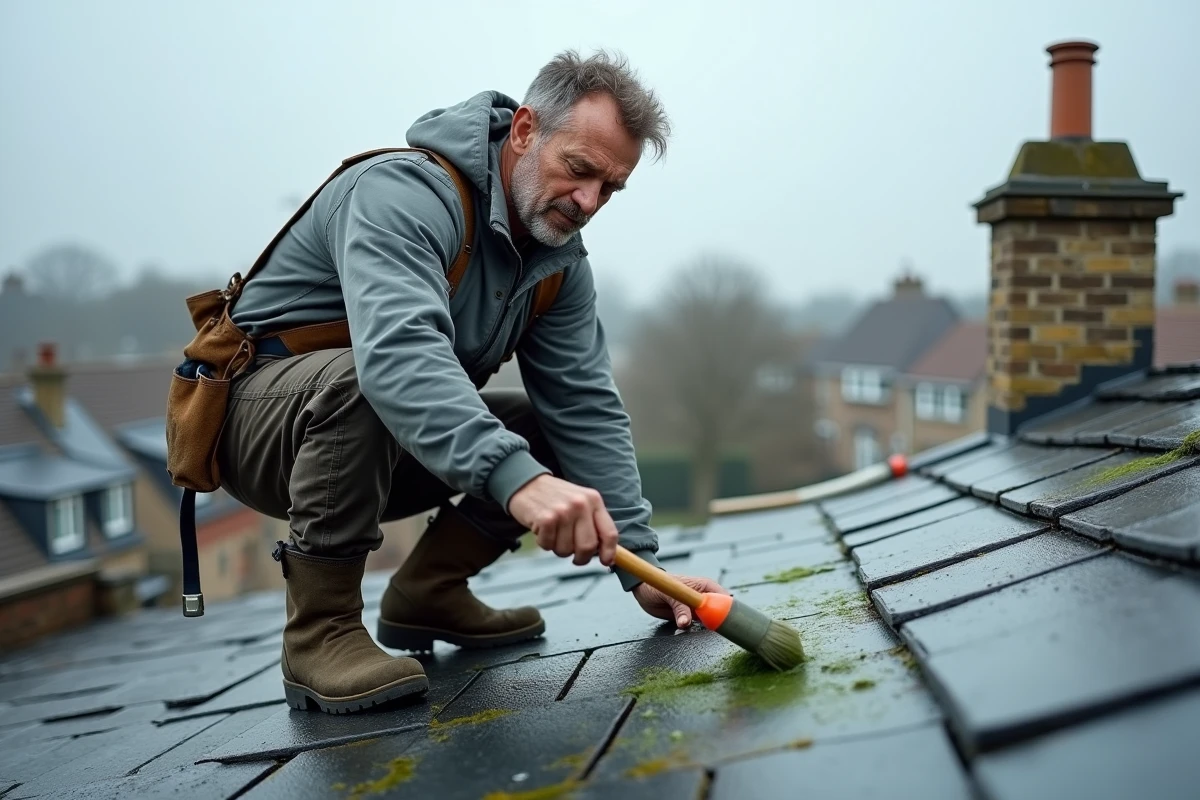
Remove clumps of moss and lichens with a stiff brush or roofer’s scraper, always working in the direction of the slope (from the ridge to the gutter). High-pressure cleaning should be avoided on clay tiles and slates: the pressure destroys the surface layer and accelerates porosity.
Phase 2: curative algicide treatment
Apply the product by low-pressure spraying on a damp roof (not wet). Ideal conditions require a temperature above 5 °C, no rain forecast within 24 hours, and low wind to limit product drift.
Phase 3: preventive protection
After a drying period in accordance with the SDS, apply a surface water repellent if the material allows it. On concrete tiles, the water repellent limits water absorption and slows down the return of the biofilm. On natural slate, we advise against water repellent treatment as it alters the appearance and can trap residual moisture.
- Recommended maintenance frequency: every three to five years depending on exposure and vegetation environment.
- Gutters and downspouts should be systematically cleaned after each intervention to avoid clogging by organic residues.
- Annual visual inspection of the roof, ideally at the end of autumn, to detect the first signs of recolonization.
The fight against algae on roofs becomes more effective when it combines a precise biological diagnosis, products compliant with current biocidal regulations, and a mechanical protocol that respects the material. For a new or renovated roof, AR coatings with metal granules are currently the most sustainable preventive option.