
The distribution of costs for renovating the roof of a condominium does not always follow the logic one might expect. Some regulations orchestrate a tailored division based on the location of the units and even exempt ground floor residents. However, classifying the roof as a “common area” does not resolve all questions regarding the sharing of expenses. Courts regularly remind us: the obvious is not automatic.
In case of an emergency intervention, the property manager can act without prior approval from the co-owners. However, payment is still governed by specific rules. Between possible recourse against a negligent co-owner and the terms of compensation after damage, the financial management of projects can quickly become complicated.
See also : Dietary Supplements for Hearing: Perspectives and Controversies
Roof in a condominium: understanding what falls under common areas and private areas
The reality of a roof in a condominium goes beyond the simple assembly of tiles or slates that cover the building. It is rooted in the legal distinction between common areas and private areas. By default, the roof belongs to the common areas: it protects each dwelling, and its maintenance engages all co-owners. This is what most condominium regulations clearly state, to preserve the collective property.
However, the condominium regulations can introduce exceptions, sometimes subtle. If a rooftop terrace benefits only one co-owner, it may fall under that owner’s exclusive enjoyment, who will then be responsible for all or part of its regular maintenance, according to the terms of the regulations. Roof windows (Velux) or certain waterproofing elements for private use are also the responsibility of the concerned unit.
You may also like : Travertine: An Elegant and Durable Choice for All Your Projects
The question “ Who owns the roof in a condominium ” illustrates the confusion that sometimes reigns over the delineation of obligations. In the event of an incident or during work, the analysis of the regulations prevails. In case of persistent doubt, the general assembly decides, sometimes after lengthy discussions. The distribution of costs then derives from how the roof is classified: common area, private area, or private area with exclusive enjoyment.
The condominium regulations play a central role in this organization. They precisely delineate the boundaries between collective duties and those of each co-owner. Every phrase matters during its drafting or updating, as it can impact the financial balance of the building.
Who decides, who pays? Distribution of responsibilities and costs in case of work or repairs
It is the general assembly of co-owners that decides to undertake work on the roof. Whether it is a complete renovation, thermal improvement, or a specific repair, each project must be put to a vote. The required majority depends on the nature of the work: simple maintenance requires a basic majority, while improvements or installation of equipment (like solar panels) require a reinforced majority. The union of co-owners, gathered in assembly, assesses the urgency, scope, and selects the companies responsible for the project.
The sharing of the bill is based on the shares held by each owner. Living in the attic does not mean paying more, unless otherwise clearly stated in the regulations. To cover expenses, funds are first drawn from the work fund, which is now mandatory in most condominiums. If the amount is insufficient, a supplementary call for funds is necessary.
Here are the types of work and financing that may concern the roof:
- Work eligible for aid: energy renovation, insulation, roof covering replacement.
- Possible financing: MaPrimeRénov’ Copropriété, collective eco-PTZ, reduced VAT, energy savings certificates.
In an emergency situation, significant leaks, storms, the property manager can immediately call in a company, then submit the expense for ratification by the assembly. The condominium insurance covers covered damages. If a conflict arises or a co-owner contests the procedure, the judicial court can be called upon to decide.
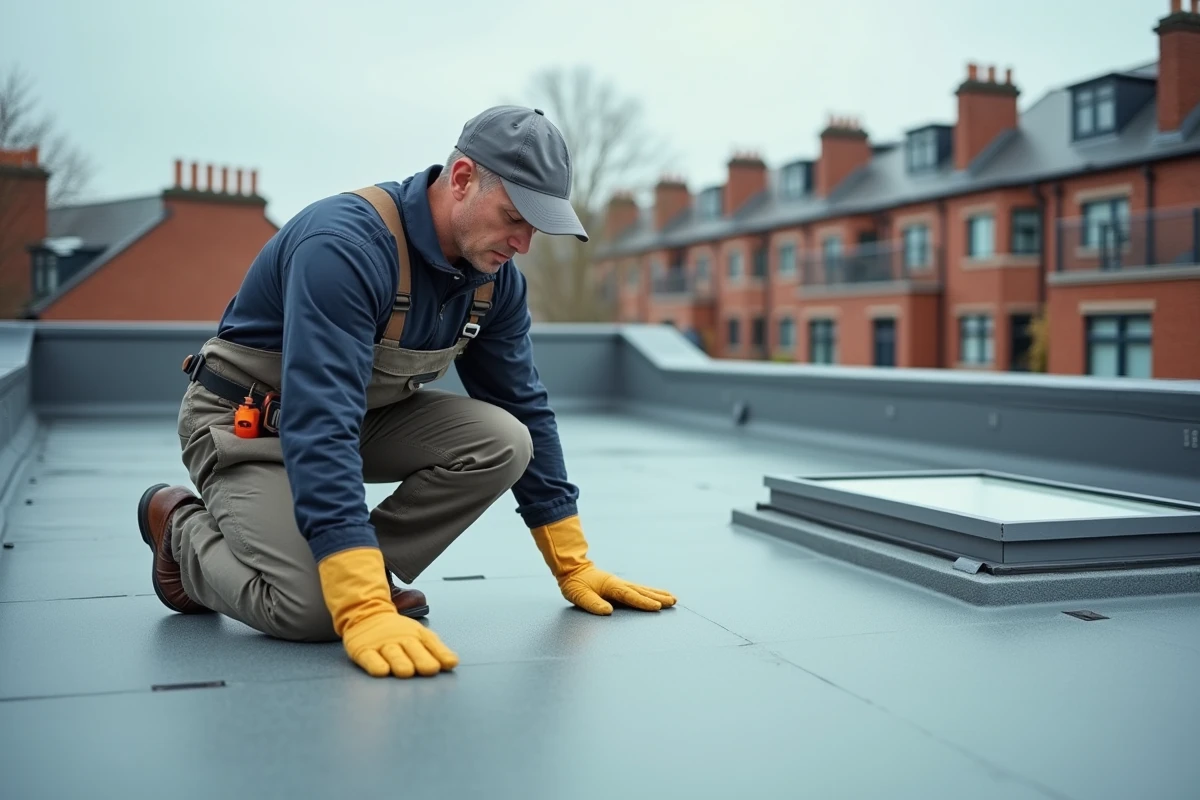
The role of the property manager and the importance of surrounding oneself with professionals to manage the roof well
The property manager plays a central role in managing the roof. As the representative of the union of co-owners, he implements the decisions made in the general assembly, requests quotes, selects competent contractors, and coordinates interventions. When an incident occurs, such as a leak or falling tiles, he acts without delay and then submits the expenses for approval. Speed and rigor are the two requirements of the position.
The board of trustees, on the other hand, monitors. It oversees the actions of the property manager, makes informed suggestions, but has no decision-making power. Its role is to stimulate, demand transparency on quotes, monitor the progress of projects, and ensure compliance with standards. Co-owners must also get involved: examine proposals, check the ten-year guarantees of companies, ask for details on the materials used (tiles, slates, zinc) or on the benefits of thermal insulation.
The success of the work depends on the competence of the chosen professionals. For a repair or energy renovation, only technical mastery and solid insurance guarantees the building’s durability. The management of the roof in a condominium leaves no room for improvisation. Every intervention, from a specific repair to a total renovation, must follow a methodical and demanding approach, faithful to the condominium regulations and current rules.
Ultimately, the roof of a condominium is the balance point between collective vigilance, administrative rigor, and the good choice of professionals. Poorly managed, it quickly reminds everyone of its presence, rain or shine.