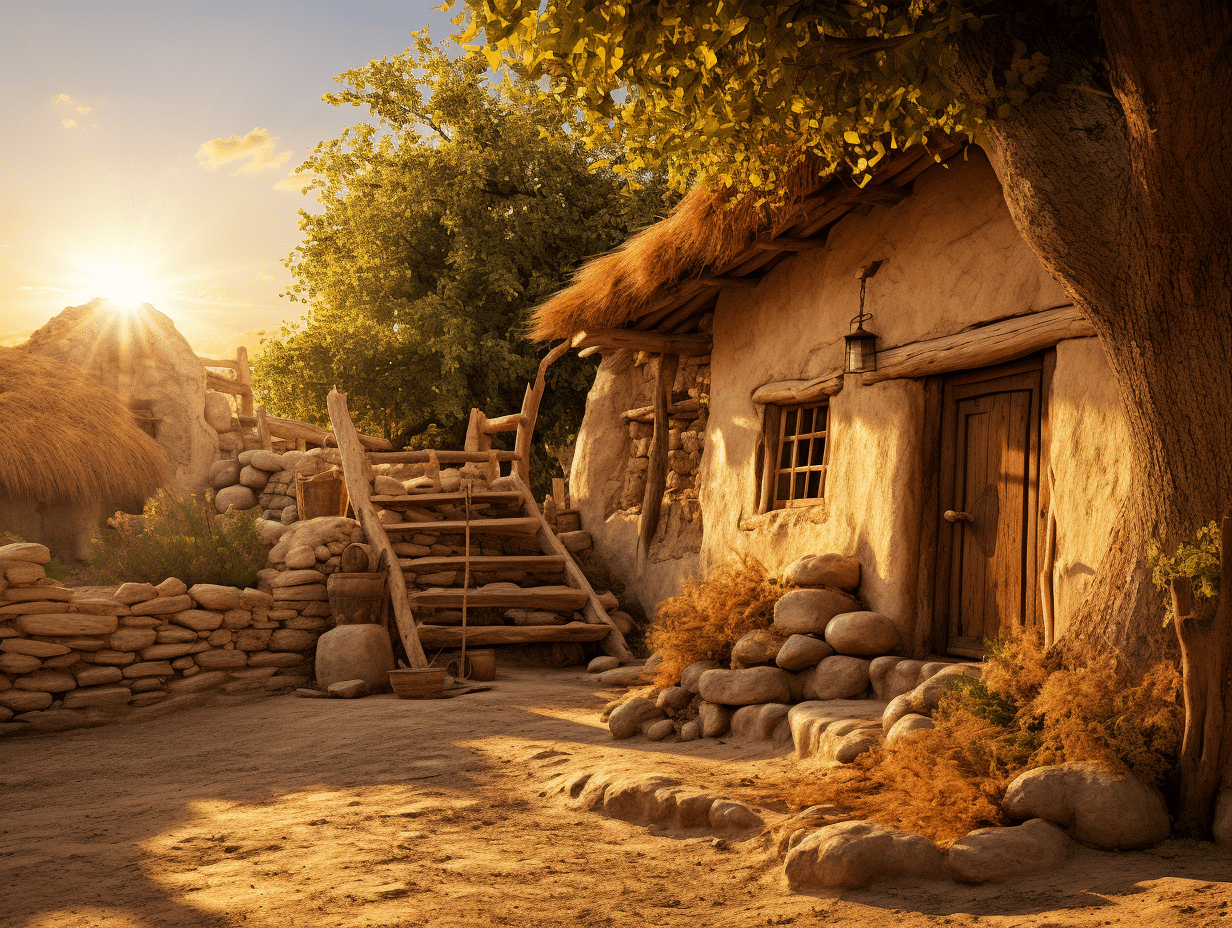
At the heart of the debates on sustainability and ecology, attention is focused on ancestral building practices. These methods, long overshadowed by modernity, are regaining popularity in a world seeking environmentally friendly solutions. Using local materials and principles harmonious with nature, these millennia-old techniques demonstrate that a habitat can be both sustainable and aesthetically pleasing. Their renaissance is driven by pioneers of sustainable development who aim to reduce carbon footprints and promote lifestyles closer to natural balances.
cob house
Rediscovery of traditional know-how in modern construction
Within the confines of Boromo, west of Ouagadougou, the Youlou family perpetuates a millennia-old architectural heritage. Kadja Youlou, matriarch of this family, lives in a nubian vault house, a prime example of the resilience of ancestral practices in the face of modernity. Her husband, Séri Youlou, a farmer and mason, is also a co-founder of the La Voûte nubienne association, alongside Thomas Granier. Together, they highlight the utility and beauty of using raw earth.
This earth, skillfully molded, gives rise to solid and durable structures, like the cob house which, although simple in design, proves to be a clever compromise between cost, efficiency, and sustainability. The works of La Voûte nubienne, with over 4,000 projects to their credit in West Africa, are not just constructions; they embody a philosophy of life, an intelligent return to roots, where function does not yield to aesthetics.
Beyond beauty, ecoconstruction offers significant functional advantages. Raw earth habitats maintain a pleasant indoor temperature, cooler by 4 to 6 degrees compared to the outside, an undeniable asset in the Sahel regions. The association has also trained 1,500 workers, including 1,000 in Burkina Faso, demonstrating the positive social impact such an initiative can have on local communities.
It is worth highlighting Thomas Granier’s proposal for a carbon credit mechanism to support ecoconstruction. This innovative approach could finance sustainable construction projects while encouraging polluters to reduce their carbon footprint. It is a vision that embraces both the preservation of natural resources and socio-economic development, proving that ancestral building techniques can be adapted to meet contemporary challenges.
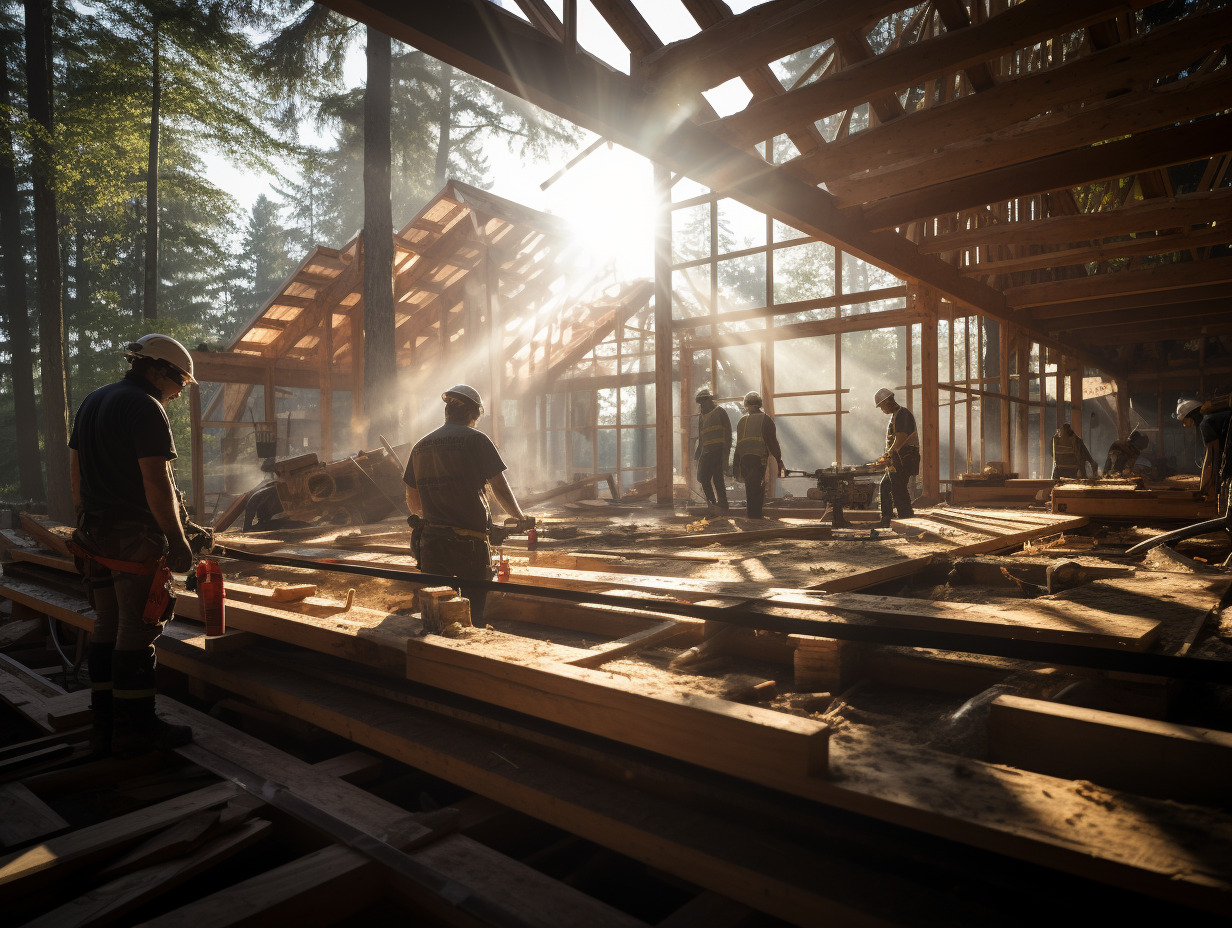
The principles of vernacular architecture in the service of sustainability
At the edges of the Sahel, the nubian vault stands out as an architectural response to desertification, a scourge threatening the ecological balance of the region. This technique, drawing from the creative genius of builders from the past, presents itself today as a model of low-carbon construction with high potential. It combines the judicious use of local materials, such as raw earth, with construction methods proven by centuries of practice.
The sustainability of these buildings is not limited to their robustness against the elements; it is also measured in terms of costs. Indeed, building a nubian vault requires 30 to 60% less financial resources than conventional methods, such as erecting walls with cement blocks. These substantial savings enhance the appeal of these ancestral techniques, which, far from being obsolete, prove to be contemporary solutions in the face of economic imperatives.
In this approach to reclaim traditional knowledge, the La Voûte nubienne association does not merely construct; it transmits know-how, thus training local artisans in these environmentally friendly methods. The training provided has already enabled 1,500 workers in West Africa, including 1,000 in Burkina Faso, to become agents of change, builders of a future where habitats are in harmony with their environment.
The approach to ecoconstruction adopted by this vernacular architecture is part of a logic of energy efficiency and thermal comfort. Nubian vaults, thanks to the thermal inertia of raw earth, maintain a cooler indoor microclimate, essential in areas subject to high temperatures. This factor, combined with strength and weather resistance, extends the lifespan of these constructions to a minimum of fifty years, while reducing the ecological footprint of buildings. Thomas Granier’s bold idea of linking the financing of ecoconstruction to a carbon credit mechanism embraces a broader vision, one of architecture that serves not only its occupants but also the planet.