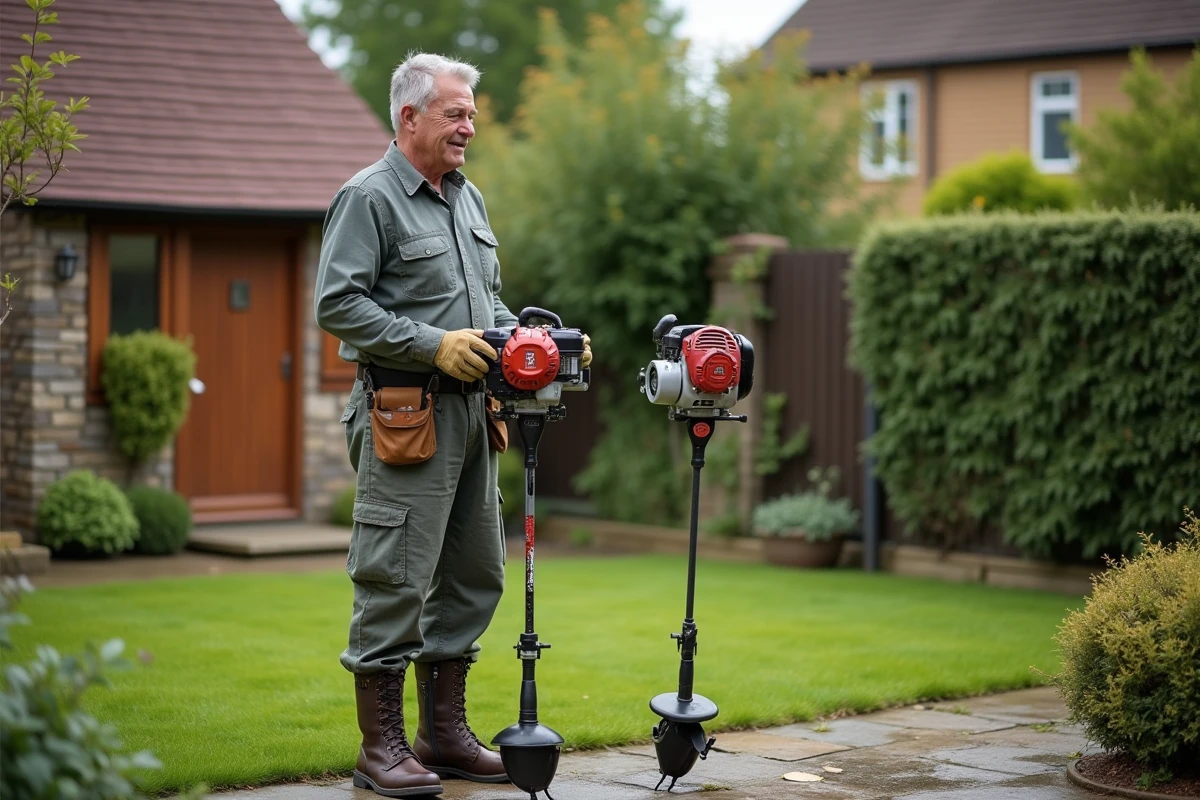
Some thermal engines display impressive power but neglect ergonomics or long-term reliability. Models worn like wheeled models, each configuration imposes unexpected compromises between autonomy, maneuverability, and noise. Contrary to popular belief, compatible accessories and ease of maintenance often play a more decisive role than just the advertised power.
The offering has diversified, making the choice much more complex than it seems. A careful examination of technical criteria and actual needs remains essential to avoid an unsuitable or oversized purchase.
Why the thermal trimmer appeals to demanding gardeners
The thermal model has become a must-have for those who want a pristine garden. Its power, often exceeding 1000 W, combined with a cutting width that can reach up to 43 cm, makes a difference as the area expands or the grass becomes tough. Uneven terrain, overgrown borders, or thick brambles: nothing can resist it, provided that one seeks a tool designed for intensive use.
Two types of engines stand out:
- The 2-stroke engine, compact and lively, attracts attention for its lightness and responsiveness
- The 4-stroke engine, more economical in terms of fuel and less polluting, scores points with its reduced emissions and stable operation
On the most advanced models, the ability to attach metal blades changes the game: against tough vegetation, the alternative to nylon wire becomes remarkably effective.
On large areas, autonomy and robustness are significant advantages. No need for an extension cord, nor to wait for a full battery: freedom of movement is part of the deal. In return, maintenance requires genuine rigor: mechanics, cleaning, regular small checks, nothing is left to chance. Reliability is guaranteed, but the high noise level often necessitates hearing protection. For an accurate overview of models that hold up, the site https://www.coupebordurethermique.fr offers a detailed comparison, covering all user profiles, from the most rational to the most demanding in terms of raw performance.
What criteria to prioritize to find the right tool for your garden
Land area and type of vegetation
The land area directly influences the choice of thermal trimmer. For a large garden, dense edges, or thick grasses, the power and cutting width of thermal models (up to 43 cm) ensure quick and efficient work. If the terrain is uneven, compatibility with metal blades becomes an asset to tackle brambles, thick stems, and other rebellious vegetation.
Ergonomics and safety
Comfort of use hinges on the ergonomics of the trimmer: adjustable handle, telescopic shaft, carrying harness to better distribute weight, anti-vibration system to limit fatigue. For safety, one should focus on an effective protective cover, a shock-absorbing stop, and a reliable cutting head. The wire feeding system, whether manual, automatic, or Tap and Go type, affects the fluidity of work, especially during long sessions.
Here are some aspects to consider to sift through the many models:
- Accessories: harnesses, interchangeable cutting heads, protective stops, all elements that facilitate daily use
- Maintenance: frequent cleaning, storage away from moisture to avoid unpleasant surprises
- Price and value for money: investing in a robust model costs more upfront, but longevity and reliability pay off over the seasons
The most meticulous examine every detail: thickness of the nylon wire, compatibility with other accessories, actual autonomy according to the area to be treated, ease of maintenance… A well-chosen thermal trimmer is primarily a tool that fits the reality of the terrain, the frequency of work, and the level of comfort sought during finishing touches.

Comparison and practical advice for choosing the best model according to your needs
Understanding the differences: trimmer, brush cutter, grass cutter
The trimmer, also known as rotofil, is distinguished primarily by its function: it excels in finishing, accessing unreachable corners for a traditional mower. It should not be confused with the brush cutter, which is much more powerful, designed for very tall grass and thick underbrush. The grass cutter falls between the two: sturdier than a trimmer, it allows for extended use on denser vegetation.
Choosing based on use and terrain
On a large plot, overrun with thick grass, the thermal model is essential: its power exceeding 1000 W and its cutting width up to 43 cm ensure effective work, even on the toughest vegetation. Autonomy is a real plus, as is the ability to adapt metal blades. Thermal models, whether equipped with a 2-stroke engine or 4-stroke engine, however, require regular maintenance: cleaning the filter, checking the carburetor, sharpening the blades… nothing is left to chance.
For smaller areas or limited use for finishing, it is better to opt for a wired electric model or a battery model. Lighter and quieter, they prevent fatigue and are perfectly suited for gardens up to 400 m². An ergonomic handle, an anti-vibration device, and a cutting head suited to the type of grass make a difference during use.
Some points to watch for making the right choice among available models:
- For value for money, observe the sturdiness of materials, ease of maintenance, and availability of accessories
- A regular maintenance (careful cleaning, sheltered storage) keeps your tools performing well over the long term
A well-chosen trimmer is the promise of a neat garden, without compromise and without wasting time. Grass grows, but control always remains with the savvy user.