A colleague who is picking up badminton again after ten years off, a neighbor who signs up for a pottery workshop on Saturday mornings: we often notice that these people change their pace, sleep better, and complain less. The link between leisure and daily well-being is not just an intuition.
A journal published in 2025, reported by Penn State University, confirms that leisure activities are associated with measurable benefits for mental health, even if the data remains heterogeneous depending on the audiences and types of practices.
Leisure and social connection: a lever against isolation in France
We often talk about relaxation or creativity when discussing leisure. We forget a more subtle effect: collective leisure prevents social isolation. In France, nearly one in four people reported feeling lonely in 2025, according to the Solitudes study by the Fondation de France and Crédoc, as reported by Le Monde.
Group workshops, small neighborhood sports clubs, cultural outings with friends, or volunteering act as local support systems. People don’t just come for the activity: they come for the coffee afterward, the conversation in the parking lot, the regular meeting that structures the week.
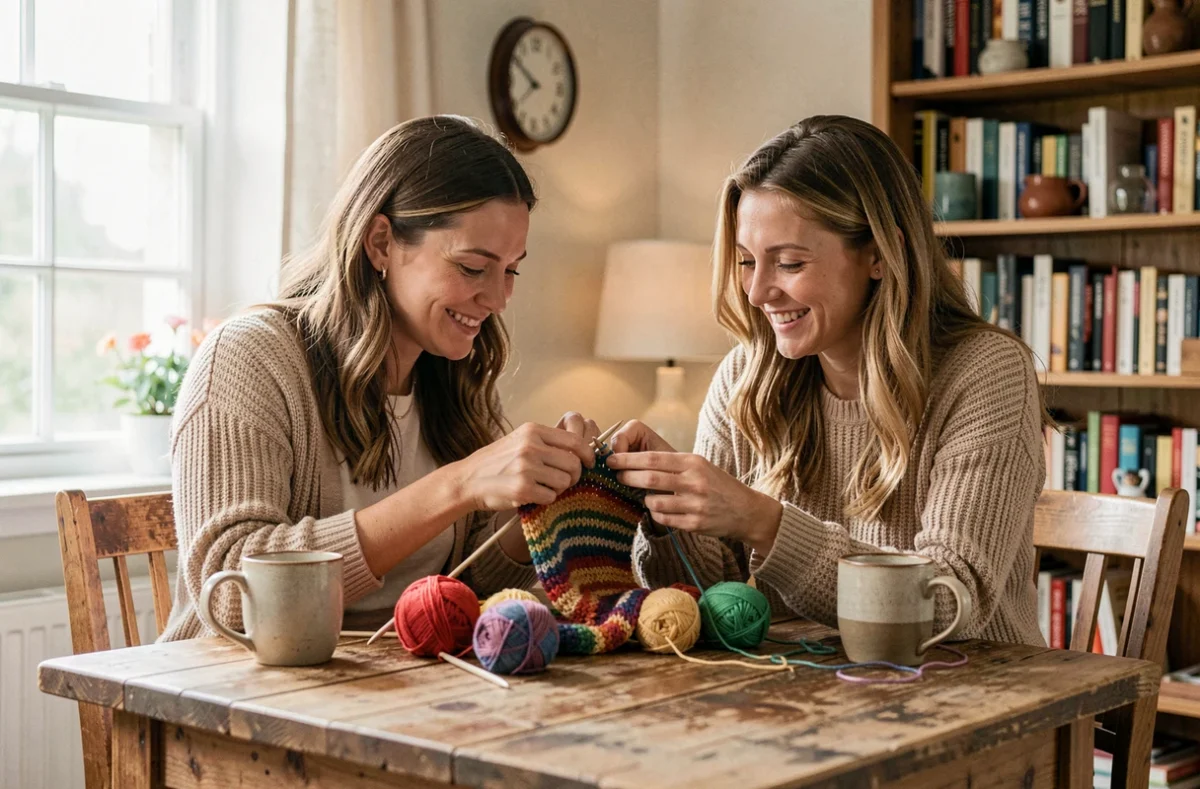
Specifically, when joining a sewing workshop or a group yoga class, the regularity of the meeting matters as much as the activity itself. It is this repetition that creates a sense of belonging, much more than the quality of the technical gesture. To explore various options, leisure on Mon Blog Beauté gathers ideas for accessible activities, from DIY to outdoor outings.

Creative activities and well-being: what studies really show
It is widely said that creative leisure reduces stress. The reality is more nuanced. An English study from 2024, reported by Compound, shows that creative activities improve overall well-being without necessarily reducing anxiety or loneliness. In short, we feel better overall, but it is not an anti-anxiety treatment.
This distinction matters. If one expects painting or scrapbooking to make their anxieties disappear, disappointment may kill motivation. On the other hand, if one approaches these activities as a space for relaxation where the outcome does not matter, the benefit to mood and self-esteem is tangible.
Which creative leisure activities to choose for beginners
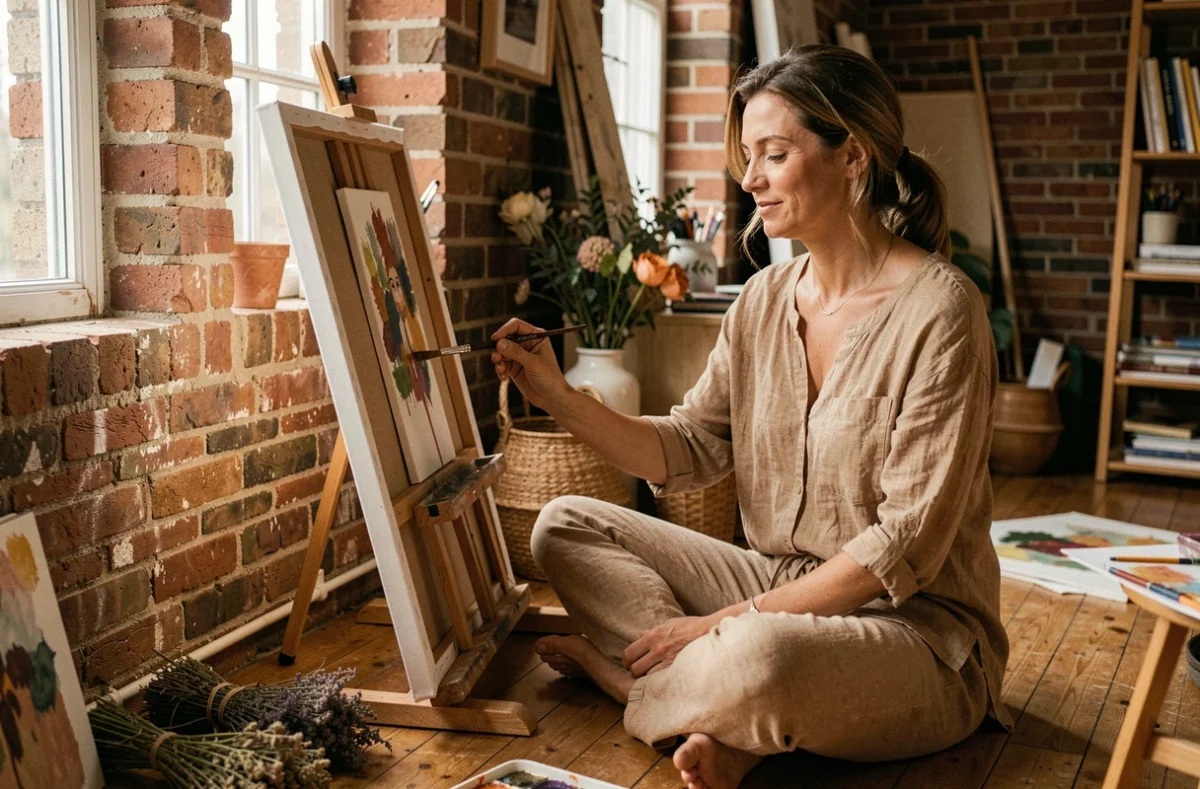
No special talent is needed. What works is choosing an activity that engages both hands and attention simultaneously. Pottery, drawing, sewing, or even a DIY decoration project meet this criterion.
- Pottery and modeling require tactile concentration that effectively cuts off the flow of distracting thoughts, and feedback on this point varies according to individual sensitivity.
- Drawing or watercolor allows for quick progress at the beginning, which maintains motivation over several weeks.
- DIY projects (furniture customization, jewelry making) offer a concrete result that can be used or given as a gift, which enhances satisfaction.
The idea is not to multiply projects but to maintain one over time. A regularly practiced hobby brings more than a constant rotation of activities.
Gentle physical activity and relaxation: the underestimated duo
Yoga, forest walking, or swimming are not spectacular. They are not necessarily associated with the word “leisure” because they resemble a lifestyle choice. However, their effect on daily well-being is documented more robustly than that of many other practices.
What distinguishes these activities is that they combine moderate physical effort with a sensory component. Contact with water, fresh air, or the slowness of yoga movements activates a recovery mode that the brain does not reach in front of a screen.
Integrating gentle physical activity without disrupting your schedule
You don’t need to block off two hours. Thirty minutes of brisk walking during lunch break, an online yoga class in the morning before breakfast, a swimming session on Sunday: these are formats that fit into a busy week.
- Associate the activity with a fixed moment of the day (morning, break, evening) rather than a floating time slot that you end up canceling.
- Start with a low frequency (once a week) and only increase if the enjoyment is there.
- Prioritize proximity: a park ten minutes from home is better than a gym thirty minutes away that you won’t visit.
Music and learning: stimulating the mind through intellectual leisure
Learning an instrument, taking a language course, joining a book club: these leisure activities engage working memory and attention capacity in a way that differs from professional daily life. We are not talking about performance but about maintaining curiosity as a factor of mental well-being.
Music holds a special place. Playing an instrument, even at a beginner level, simultaneously engages coordination, listening, and creativity. It is one of the few activities that activates so many brain areas at once.
Learning works even better when shared. A music workshop among amateurs or a foreign language conversation group adds the social dimension that amplifies the benefits. Here we find the same mechanism as for creative workshops: the collective and regular framework matters as much as the content of the activity.
The trap would be to turn every leisure activity into a productivity goal. One does not learn guitar to “optimize their brain”; one learns it because it is enjoyable. Well-being follows, as long as the logic is not reversed. A hobby that becomes a chore loses precisely what made it beneficial: the freely chosen pleasure, without any outcome stakes.