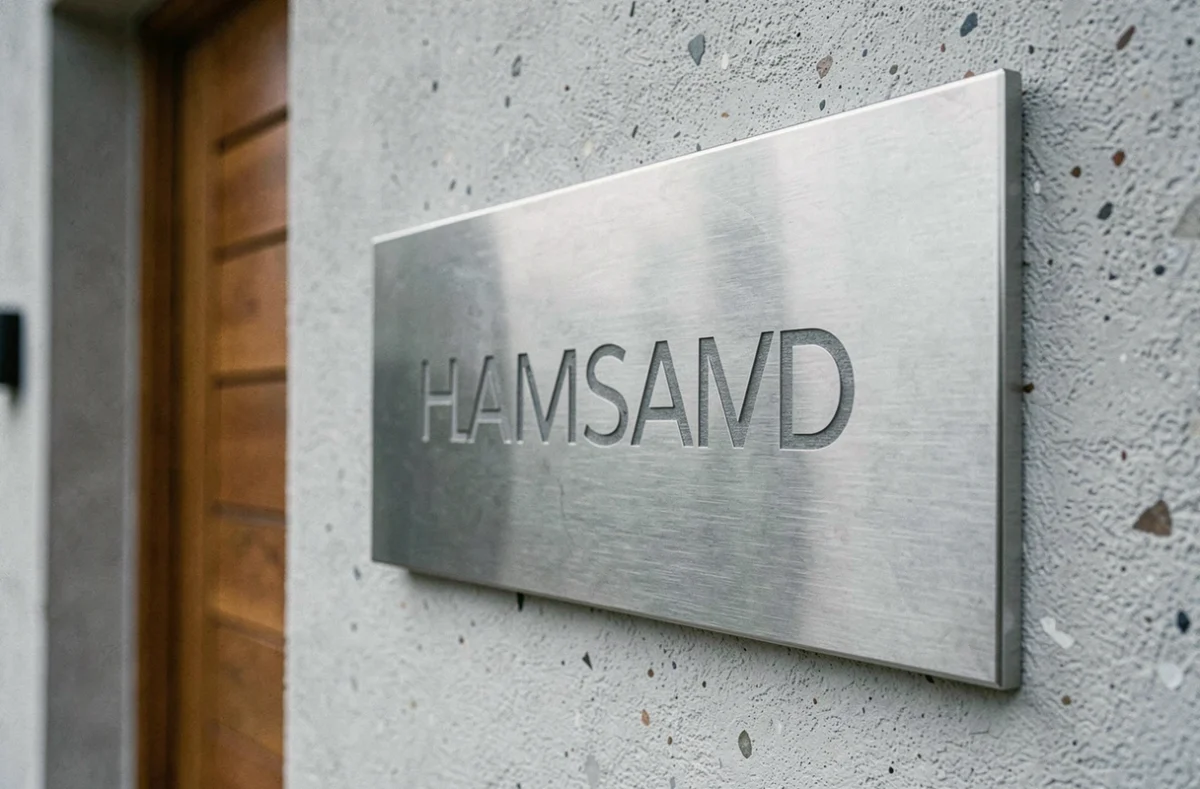
Laser engraving on a mailbox plaque is not just an aesthetic choice. It is a thermal marking process that modifies the surface structure of the material, producing a permanent contrast without the addition of ink or applied film. For a family plaque exposed to the elements, this technical distinction is a game changer for longevity.
Thermal marking and engraving depth: what differentiates laser from mechanical
The laser beam locally heats the material to a temperature close to its melting point. This heating causes a color change through oxidation, without chip removal or burrs. The surface remains smooth, which limits the accumulation of dirt and moss outdoors.
In mechanical engraving, a cutter carves a physical groove into the substrate. This groove can collect water and promote corrosion on untreated metals. The laser, on the other hand, does not create a relief that can be exploited by moisture, which reduces degradation on plaques exposed to the north or in humid areas.
Two laser settings stand out depending on the substrate: a moderate power with a fast cadence for technical plastics (PVC, plexiglass), and a higher power on anodized aluminum to achieve a sharp white contrast on a dark background. The precision of the line goes well below a millimeter, allowing for fine fonts and detailed pictograms.
For personalized family plaques with names and silhouettes, Sidonie & Gédéon’s advice outlines the possibilities offered by this level of precision.
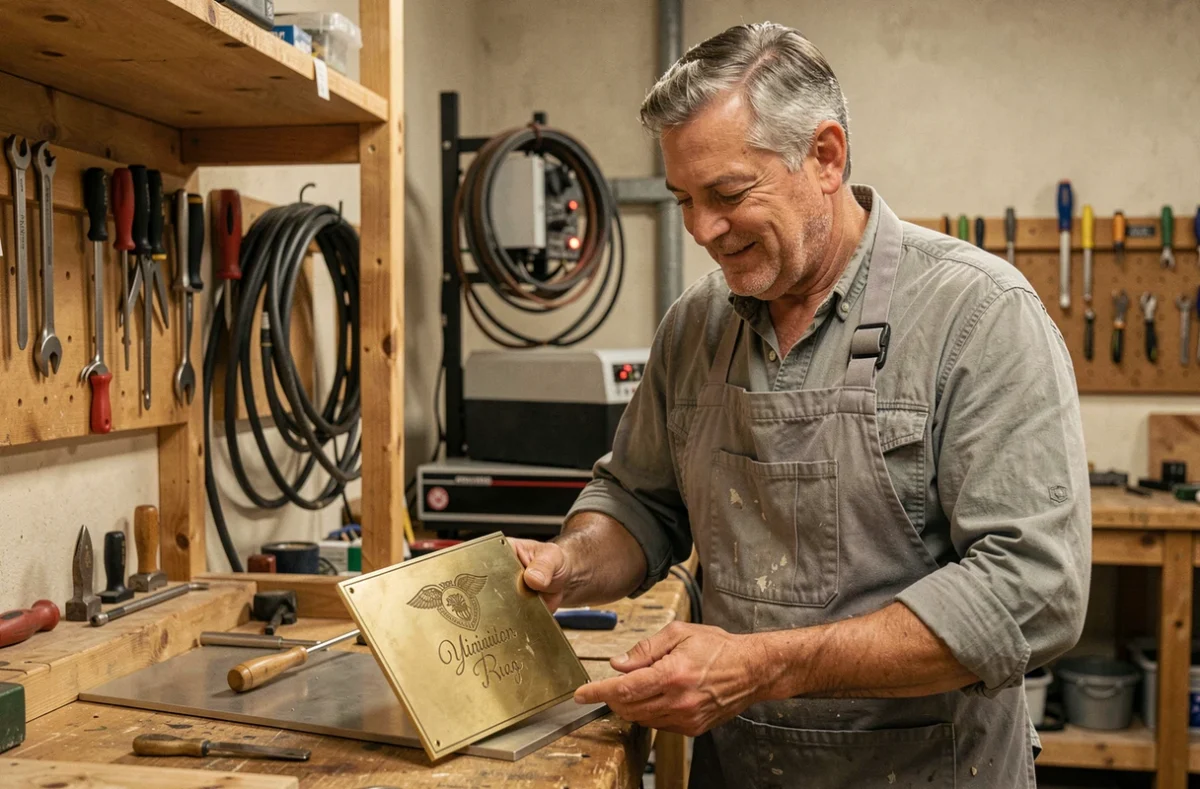
Choice of plaque material: actual exposure takes precedence over aesthetics
A workshop report published in 2026 indicates that Gravoply-type laminates can lose their color under prolonged sun exposure. Anodized aluminum, on the other hand, shows better UV resistance. This point is often overlooked in online configurators, which highlight visual rendering without specifying aging limits.
The material is as important as the engraving technique. Impeccable laser engraving on an unsuitable substrate for exposure will lose readability after a few seasons. Before choosing a color or font, one must assess the orientation of the mailbox and its degree of exposure to the elements.
Common materials and outdoor behavior
- Anodized aluminum: the best compromise for a plaque exposed to full south. The oxide layer protects the metal and stabilizes the contrast of the laser engraving over time.
- Plexiglass (acrylic): lightweight, available in several colors, suitable for sheltered locations. Its UV resistance depends on the quality of the polymer; high-performance versions withstand direct sunlight better.
- Rigid PVC: economical and easy to engrave, but its longevity is the most limited. To be reserved for mailboxes protected by a canopy or located in building lobbies.
- Polished brass: high-end appearance, engraving by HD thermal marking. Sensitive to fingerprints and oxidation if the protective varnish is not renewed.
Readability of the engraved plaque: contrast, character size, and real conditions
The sharpness of the laser line is not enough to guarantee that a person will read the name from a distance. The contrast between the background and the text, the height of the characters, and the reflections of the substrate play a role at least as determining as the fineness of the engraving.
Signage recommendations suggest testing the result on the final material in actual lighting conditions. A dark plaque engraved in light will be perfectly readable in direct light but may become difficult to decipher under low-angle lighting or in a poorly lit lobby.
Criteria to check before confirming an order
The minimum character height depends on the reading distance. For a standard mailbox viewed from less than a meter away, letters a few millimeters tall are sufficient. On a gate pillar read from the sidewalk, the size must be significantly increased to remain legible.
The choice of font also matters: a sans-serif font engraved with a laser retains its readability better than a font with fine serifs, whose details can blend with the grain of the substrate. Favor regular-stem fonts for outdoor plaques.
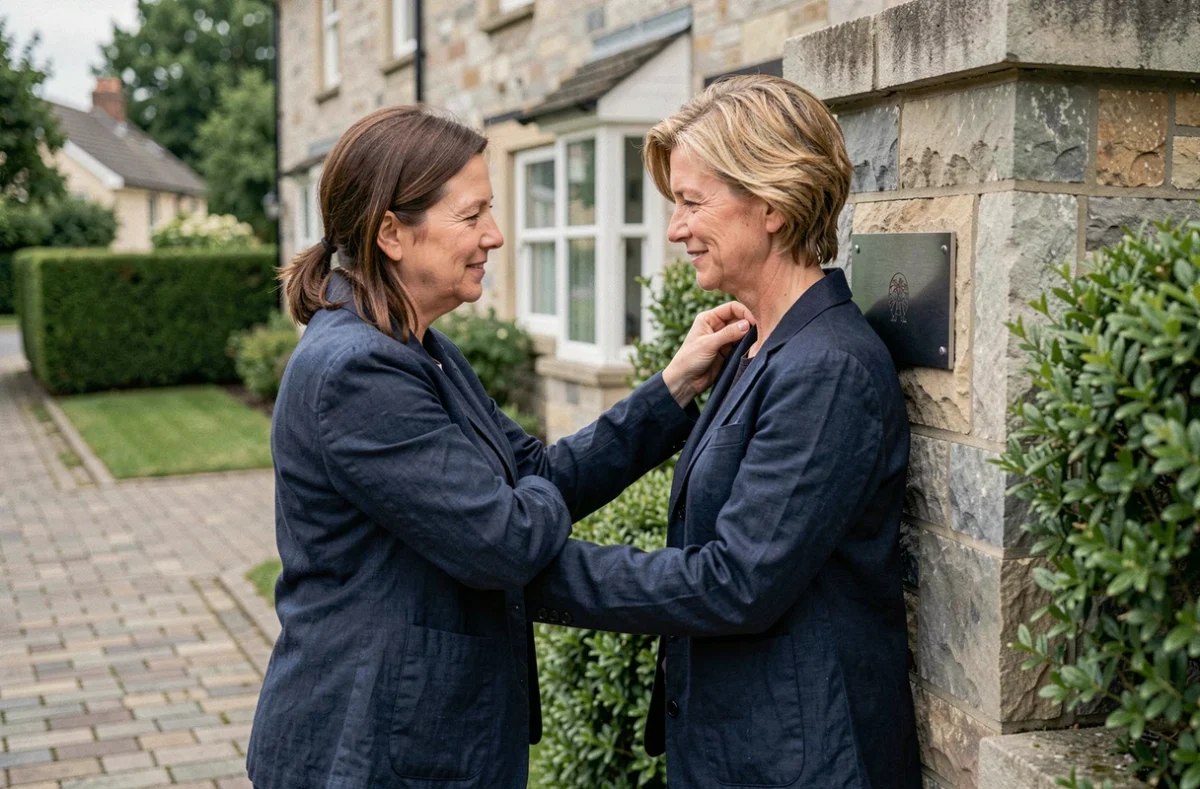
Mailbox plaque in a condominium: identification and practical constraints
The Post Office indicates that the absence of a name on the mailbox, doorbell, or intercom can motivate the return of mail to the sender. Laser engraving allows for maintaining up-to-date identification without replacing the entire substrate: on certain materials, local re-engraving is possible to add a name after a change in family composition.
In collective housing, the installation of the plaque may fall under the condominium regulations. Some property managers impose a format, background color, or uniform typography for all mailboxes. Checking these constraints in advance avoids ordering a personalized plaque that is incompatible with the building’s requirements.
Laser engraving easily adapts to standardized formats because it does not require a physical template or specific tooling for each dimension. A vector file is sufficient to transition from a standard rectangular format to a custom cut.
Family personalization: what the laser allows and what to avoid
The precision of the beam allows for the integration of fine graphic elements on the plaque: family silhouettes, pictograms of pets, house numbers integrated into the design. This level of detail is inaccessible to mechanical engraving on reduced formats.
The limit to keep in mind: the finer the motif, the more sensitive it is to external dirt. A pictogram a few millimeters engraved on a light substrate in an area exposed to wind and rain will eventually lose its sharpness. The solution is to slightly increase the thickness of the graphic lines to compensate for natural wear.
Laser engraving remains the only process that combines advanced graphic personalization, absence of added consumables, and mechanical resistance of the marking. For a family plaque intended to remain in place for several years, it is this combination that justifies the choice of laser, not the technique alone.