Choosing a house for your family involves balancing technical, financial, and geographical constraints that will impact daily life for decades. The choice of the ideal house is not just about counting bedrooms: it involves the quality of the soil, the energy performance of the building, and the suitability of the home for the actual habits of the household.
Clay Soil and Structural Risks: An Invisible Criterion During Visits
Before considering the surface area or the number of bedrooms, a geological factor determines the very solidity of the building. A study published on data.gouv.fr in October 2026 indicates that, from 2021 to 2025, more than half of the houses sold in metropolitan France within the studied area were located in zones with medium to high exposure to shrink-swell clays.
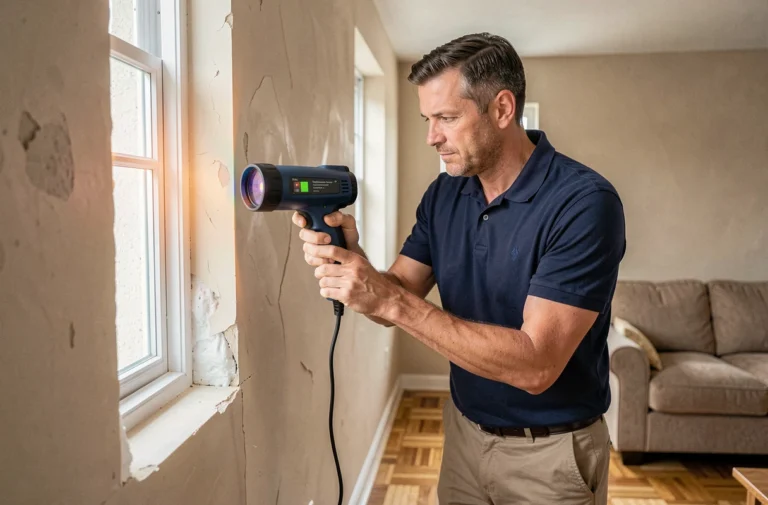
These soils move with the rhythm of droughts and rehydrations. The resulting cracks are not always visible during a visit: they may have been filled or concealed by a recent coating. For an older house, prevention obligations (geotechnical study, in particular) mainly apply to new constructions and the sale of buildable land, not to existing buildings.
Checking the property’s history, any declared damages, and foundation work done remains a necessary step to take on your own. The clay exposure map, available online, serves as a warning signal, not a diagnosis of the plot. When considering visiting the house on La Maison De Daniel, cross-referencing this verification with the land data allows for the early elimination of at-risk properties.
Energy Performance of the Home: Read the DPE Before Calculating Your Budget
A house listed at an attractive price can end up costing much more than a newer house once energy bills are factored in. The energy performance diagnosis (DPE) rates the home from A to G. Since the gradual restrictions on renting energy-inefficient homes, an unfavorable DPE also affects resale value.
The DPE displayed in a listing deserves careful reading. The consistency between the announced class and the visible characteristics of the property (type of glazing, visible insulation in the attic, heating system) provides a first clue of reliability. A glaring discrepancy justifies requesting the complete document from the seller even before scheduling a visit.
What the DPE Doesn’t Tell You About Your Daily Comfort
The DPE measures theoretical consumption. It does not account for the orientation of living spaces, natural ventilation, or acoustic comfort. A house rated C with large south-facing windows can overheat in summer without air conditioning, while a house rated D well-oriented to the northeast will remain cool.
For a family with children, summer thermal comfort is as important as winter heating. Visiting the property at different times of the day, ideally during warm periods, usefully complements the reading of the diagnosis.
Suitability Between Family Lifestyle and Housing Configuration
The total area of a house provides little insight into its actual livability. Two houses of equivalent size can offer radically different living experiences depending on the layout of the rooms, the flow between spaces, and the separation between quiet areas and common living zones.
Two-Story or Single-Story: A Choice Linked to the Age of the Children and the Duration of the Project
A two-story house naturally separates night and day spaces, which suits families with teenagers. A single-story home facilitates monitoring young children and remains accessible if the household plans to age in place. The choice depends on the project’s time horizon.
A sloping lot may impose a half-level that combines the disadvantages of both configurations without offering the advantages. Checking the topography of the land before projecting into the plans avoids this type of disappointment.
Outdoor Spaces: Garden, Terrace, and Maintenance Constraints
A spacious garden is appealing during a visit, but its upkeep represents a regular time and budget commitment. To assess whether the outdoor space matches the family’s actual lifestyle, several concrete criteria deserve consideration:
- The area of lawn to mow compared to the available free time on weekends, knowing that a large yard requires several hours of monthly maintenance
- The presence of deciduous trees, which generate significant seasonal cleanup and can darken rooms in autumn
- The orientation of the main terrace, which determines whether the outdoor dining space will be usable in the summer evenings or only during midday
Technical Checks Before Buying a Family Home
Beyond the DPE and the soil, several technical points distinguish a well-managed purchase from a risky one. Mandatory diagnostics (asbestos, lead, termites depending on the areas, electricity, gas) provide a foundation, but they do not cover everything.
- The condition of the roof and framework, which represents one of the most costly renovation items and is not covered by a standard mandatory diagnosis
- The water flow rate and pressure at the tap, rarely checked during visits but crucial for comfort with multiple bathrooms
- The compliance of sanitation (collective or individual), which must be checked but for which the costs of bringing it up to standard remain the buyer’s responsibility
- The age of the electrical panel and the presence of an appropriate differential, especially in homes built before current standards
Requesting the invoices for work done in the last ten years from the seller allows for reconstructing the maintenance history of the property. A house with no maintenance invoices over a decade may indicate a lack of structural upkeep.
The choice of a family home hinges on considerations that real estate listings do not show: the nature of the soil beneath the foundations, the consistency between the DPE and actual comfort, and the configuration suited to the household’s evolution. Consulting the clay exposure map and cross-referencing the DPE with a careful visit remains the best filter before committing.