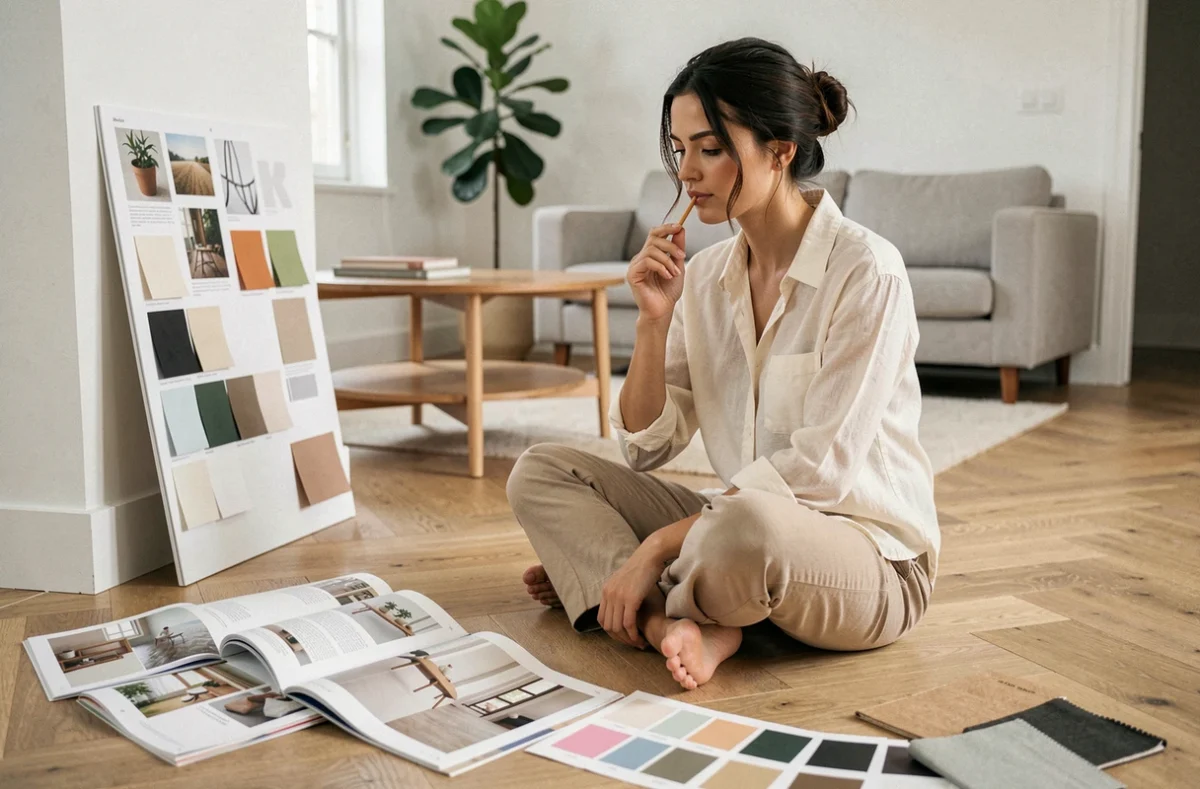
Finding home décor ideas is about more than browsing image galleries. The real key is having a way to sort through them: knowing how to filter a huge stream of visuals and pick out what can work in a real space, with its limitations in terms of floor area, light and budget.
Filter décor ideas based on your home’s practical constraints
Most articles on décor inspiration point readers to Pinterest, Instagram or magazines. The problem comes afterwards: hundreds of saved images, no clear priorities, and often a big gap between the photo and the reality of your home.
Before looking for visual inspiration, we recommend applying three practical filters to rule out ideas that won’t work from the outset:
- Ceiling height and room depth determine your choice of furniture, pendant lights and vertical storage. A bookcase that works in a loft with 3.20 m ceilings will feel overwhelming in a standard apartment.
- Window orientation determines which colour palettes will work. A north-facing room doesn’t suit highly saturated cool tones, which may look bright in a photo taken under artificial studio lighting.
- Existing flooring (wood flooring, tiles, polished concrete) can dictate or rule out certain styles. Placing a Berber rug on patterned tiles creates a visual clash that mood boards never show.
Applying these filters from the start cuts down the number of ideas to consider, and makes every piece of inspiration you keep immediately useful. The Ma Maison Idéale sitemap groups topics related to interior design by theme, making it quicker to sort ideas by room or constraint.

Décor mood boards: organise your inspiration instead of collecting it
A useful mood board isn’t a collage of different looks. It’s a working document that helps you weigh up your options.
Limit each mood board to a single room
Mixing the living room, bedroom and kitchen on the same board creates an artificial sense of visual cohesion. Lighting, circulation and functional requirements vary too much from one space to another. Creating one board per room forces you to make decisions: if you like two pieces of furniture but they would take up the same wall, you have to choose.
Include real materials, not just colours
A mood board without material samples is still just theoretical. Light oak looks different in a photo than it does under halogen lighting. Interior designers routinely add physical samples (fabric, wood veneer, paint applied to card) alongside their digital selections.
This step prevents surprises when it’s time to buy. A terracotta shade spotted in a magazine can turn salmon pink in a predominantly white room.
Reuse and one-of-a-kind pieces: an underused décor approach
New furniture catalogues make interiors look alike. To give your décor character, reuse offers pieces that no one else owns.
The second-hand market for furniture and decorative objects has become well established. Specialist platforms let you filter by style, period and dimensions, following the same constraint-based approach outlined above. A vintage 1960s solid teak piece brings a patina and material richness that contemporary melamine furniture lacks.
Decree No. 2024-134 of 21 February 2024 also regulates public procurement of goods from reuse schemes, particularly in the furniture and interior design category, and has applied since 1 July 2024. If local authorities are now embracing this approach, private individuals would do well to take inspiration from it for their own decorating projects.
Three things to check before buying a second-hand piece:
- Structural condition: a sticking drawer or a re-glued leg may indicate heavy use and could require costly restoration.
- Exact dimensions, measured rather than estimated. Older furniture doesn’t follow today’s standard sizes.
- Compatibility with the materials already in the room. A dark wood sideboard can overwhelm a small room with light flooring, or create an effective focal point.
Décor trends: use them as a guide, not a rulebook
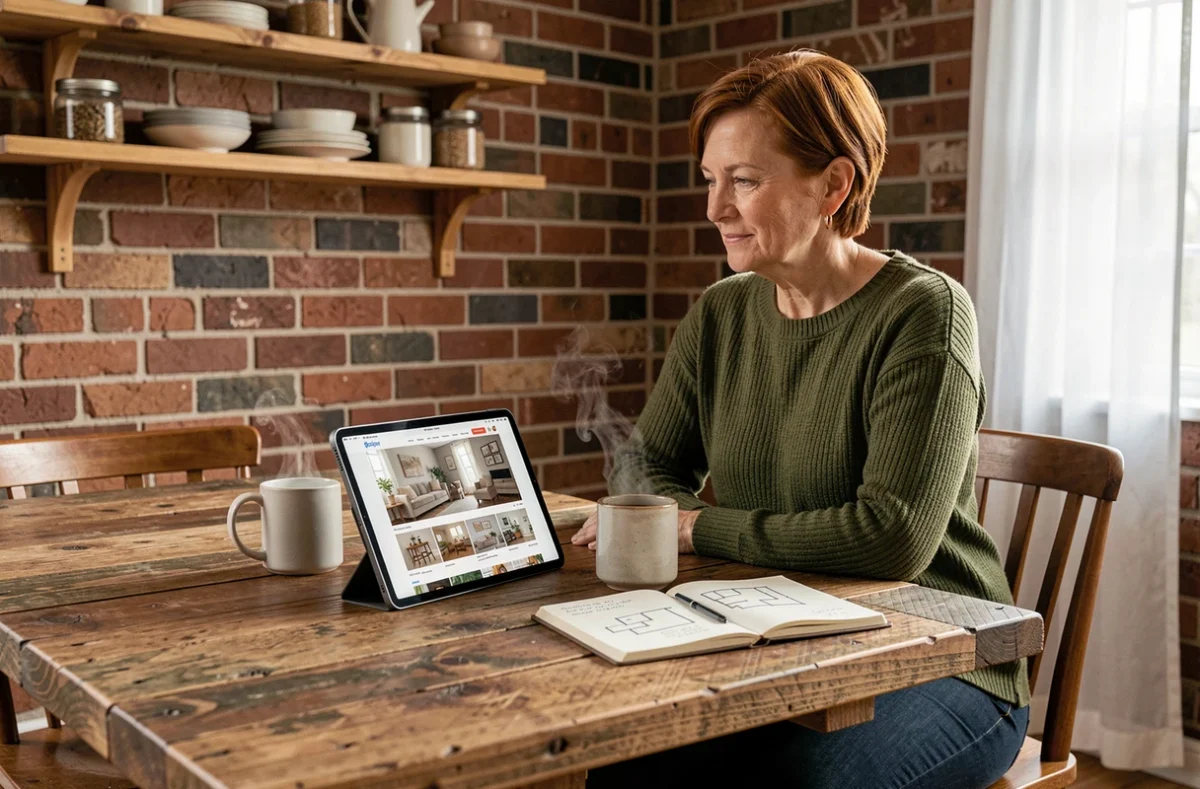
Décor trends are research cues, not instructions. Pinterest publishes annual forecasts based on changes in its users’ searches. These data reveal emerging themes (natural textures, earthy colours, rounded furniture), but there’s no guarantee that a trending style will suit a particular home.
A common mistake is to recreate an interior found online without taking its context into account. A minimalist Scandinavian living room photographed in a bright Copenhagen apartment won’t have the same effect in a poorly lit ground-floor home.
Adapt trends to your own interior style
Instead of adopting an entire décor style, pick one or two elements from a trend and work them into what you already have for a more personal result. Replacing just the textiles (cushions, curtains, sofa throw) with pieces in a colour palette you’ve spotted online lets you try out a new direction without making a major commitment.
Key furniture (sofas, tables, storage) should never be chosen to follow a passing trend. These pieces last between five and fifteen years. Choosing simple designs and durable materials, then updating accessories as trends change, remains the most cost-effective strategy.
Interior design feels more cohesive when every choice passes a two-part test: does this piece work in my actual space, and will I still like it in three years? The most enduring décor ideas come from balancing visual inspiration with the practical constraints of your home.